
Back pages: Q&A
Can economics help to deter thefts of catalytic converters?
Gerald Foong, Stephen Machin and Matteo Sandi
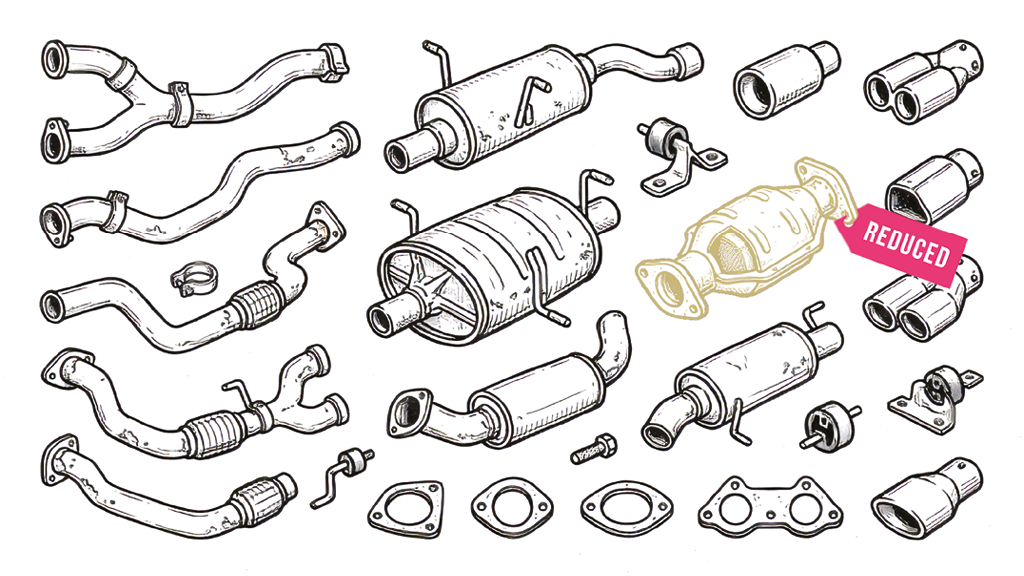
Catalytic converters reduce the harmful emissions produced by vehicles with internal combustion engines. These devices, which are fixed to the exhaust pipe underneath the vehicle, use precious metals to clean up the gases. When these metals - palladium, platinum and rhodium - increased in price, the converters became a target for thieves. The question is can understanding the economics of crime help to prevent such thefts?
What is the scale of catalytic converter theft?
The leader of a catalytic converter theft ring in the US admitted to receiving more than $600mn by reselling stolen devices between May 2020 and October 2022.
Why did the devices become such a target?
The rise in these thefts was not random, but rather, a response to economic incentives. In 2019, China announced stricter vehicle emission standards, which meant that more of the precious metals were needed to be used in the catalytic converters. Not only did the catalytic converters contain more of the metals - making them more valuable - but the new standards also boosted manufacturers' demand for the metals. As metal prices rose, the payoff from stealing them increased, thus driving more thefts.
How did the price change?
Metal prices were relatively stable in the years from 2015 before increasing dramatically around 2019. The prices of palladium and rhodium, respectively doubled and quadrupled between the start of 2019 and 2021. Subsequently, prices tapered off around mid-2022.
What was the impact on crime rates?
We estimate that a 10% increase in the value of catalytic converters resulted in a 4.5% to 8.9% increase in the theft rate of autoparts.
How do you measure supply and demand in the market for stolen catalytic converters?
We measured local supply by looking at the share of hybrid vehicles within each county. This is because hybrid vehicles' catalytic converters contain higher amounts of platinum-group metals. We measured local demand using the presence of metal recycling businesses. In counties with recyclers, and counties with a higher share of hybrid vehicles, there was a disproportionate rise in autoparts theft during the precious metals price surge - and steeper declines when prices fell.
Both the demand and supply sides play similarly important roles. Areas with recyclers saw autoparts theft rate increase by 26% relative to the pre-2019 average in these areas, while areas with a higher share of hybrid vehicles saw a 27% rise.
How can economic knowledge be used to beat crime?
Policies enacted by some US states to reduce such crimes tend to focus on the resale market, such as requiring stricter record-keeping and documentation, or restricting purchase and payment modes for scrap metal transactions. After stricter regulations were introduced, thefts fell by 26% compared with the pre-2019 average in these areas. There was no difference in areas with a higher concentration of hybrid vehicles.
This article summarises Foong, G., Machin, S. and Sandi, M. (2026) Crime and prices: evidence from thefts of expensive precious metal. CEP Discussion Paper No. 2141. An earlier version appeared on LSE USA Politics and Policy.
Gerald Foong is an economist at the Intellectual Property Office of Singapore and was formerly a lecturer of economics at Singapore Management University. Stephen Machin is a professor of economics at LSE and director of CEP. Matteo Sandi is an associate professor of economics at the Cattolica University of Milan and a CEP visiting fellow.
20 October 2026 Paper Number CEPCP753
Download PDF - Can economics help to deter thefts of catalytic converters?
This CentrePiece article is published under the centre's Crime programme.