
My must-read paper: Growth
My must-read paper
Philippe Aghion recommends research that asks what AI can do for economics
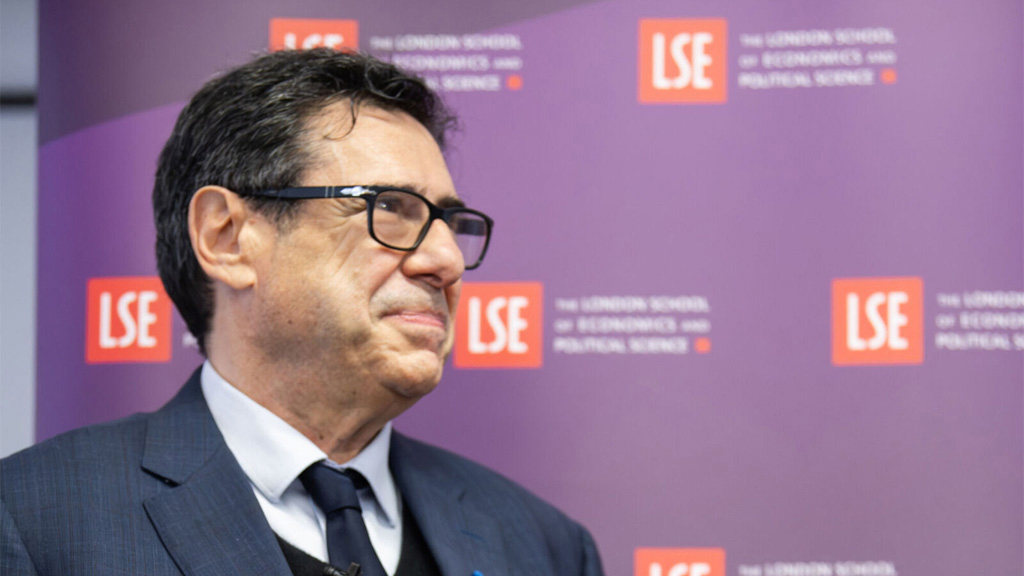
Innovation is, unsurprisingly, something which the new Nobel laureate Philippe Aghion values - not just when using economics to explain the world, but within economics itself.
"There are several papers which have inspired me, but if I had one recent paper to recommend it would be the work that Xavier Jaravel and Friedrich Geiecke have done on using artificial intelligence for surveys," Aghion said.
"This work is about using large language models - chatbots - to conduct interviews at scale. I like this very much, it is an exciting piece of work. What struck me was the inventiveness and fresh thinking. It was very much about how you can use AI as a researcher - very original and thought-provoking.
"I came across it at the National Bureau of Economic Research Summer Institute in 2025. I attended a number of presentations including Xavier's on 'Conversations at scale: robust AI-led interviews with a simple open-source platform', which was at the innovation group's session on digital economics and artificial intelligence."
The paper addresses the challenges of using AI to conduct interviews as a researcher. Jaravel and Geiecke developed a platform that runs AI-led interviews. This makes it possible to reach thousands of respondents within hours. They then assess its robustness by comparing it to human experts and using respondents' own views on the quality of the interview and check how versatile it is by using it in four different applications.
The authors highlight that AI-led interviews revealed more information than conventional open text fields, with a 142% increase in the number of words that respondents wrote. They also find that when AI was used to ask about the reasons behind electoral choices, participants preferred interacting with a conversational agent perceived as a non-judgmental entity, rather than a human interviewer.
Aghion pointed out that it wasn't just the findings, but also the research questions and approach that were novel: "A lot of the economic research on AI is about its impact on employment, on the environment, on growth. But this was something different, and that's what I like - it was maybe the start of something else, perhaps a new field, a new topic.
"I have worked with Xavier. He is outstandingly productive. Let me mention, for example, his path-breaking research on shift-share instruments and also his work on inflation inequality, looking at the basket of goods and how there are different inflation rates for the rich and the poor. He did this in a way that nobody had done it before. He's a very inventive guy, a very deep thinker."
Reflecting on changes to his own working life since winning the Nobel Prize in Economic Sciences, Aghion adds: "I am a bit swamped, but it's a fantastic thing. I am blessed. There are a lot of people who deserve it [the Nobel prize] and don't get it, so luck plays a big role. One can only be grateful. I keep doing my research, sometimes I cannot make it to all my zoom meetings, but I try.
"The Christmas break was a chance to have some time off and see friends - but I also took advantage of the time to catch up on papers in a way which was relaxed."
• Philippe Aghion was talking to Helen Ward.
Geiecke, F. and Jaravel, X. (2025) 'Conversations at scale: robust AI-led interviews with a simple open-source platform', NBER Summer Institute 2025: Digital Economics and Artificial Intelligence. Cambridge, MA. 16-18 July. National Bureau of Economic Research.
Philippe Aghion is professor at the College de France, INSEAD and LSE. He is a research associate in CEP's growth programme. He was co-recipient of the 2025 Nobel Prize in Economic Sciences. Read more about his work here.
20 February 2026 Paper Number CEPCP732
Download PDF - My must-read paper
This CentrePiece article is published under the centre's Growth programme.