
in brief... Why representation in economics matters
To inspire the next generation of black economists, how important is it for them to see people like themselves working in the profession? Felicia Odamtten, an economist at the Resolution Foundation and founder of The Black Economists Network, outlines her experiences.
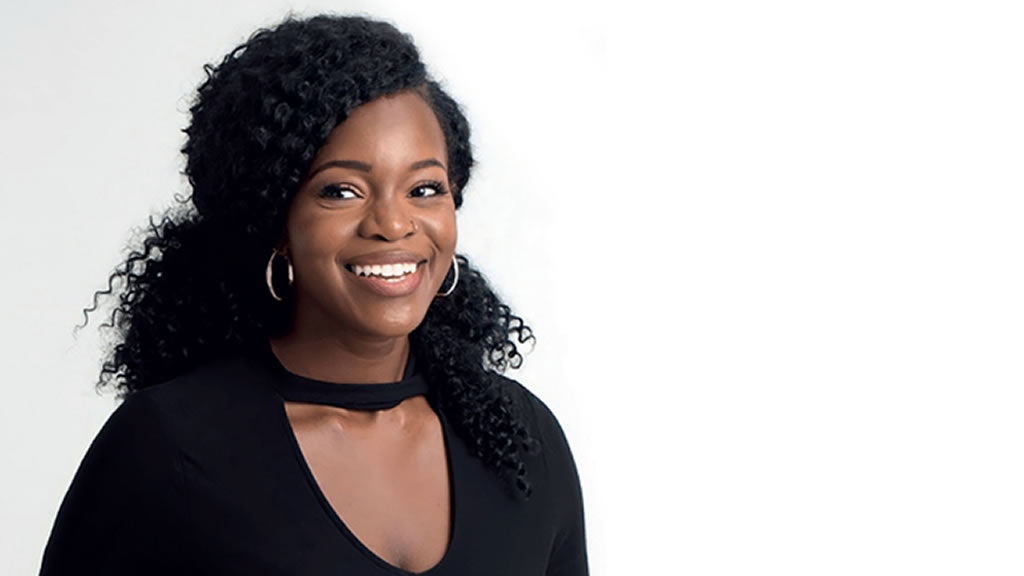
I got into economics by pure chance. When it was time to decide on my A-levels, my interest was really in business studies, but I got into a college that also did economics, which made me think: "I don't know what economics is, but this sounds really interesting." I just took a chance, did it for A-level and really enjoyed it. Then I decided to take it at university. The job prospects were good, I thought: "Maybe I'll become an investment banker!"
Studying economics at the University of Manchester, it quickly dawned on me that I wasn't really interested in the financial aspects of economics but in how economics can be used to improve people's lives and living standards. So I did a joint honours in economics and development studies.
At university, the student population is quite diverse, students come from all around the world. I was born and raised in London to Ghanaian first-generation immigrants, but I noticed that the professors didn't come from backgrounds similar to mine, even on courses on development. And the reading list didn't have anyone similar to me. I remember studying work by just two black economists: Sir Arthur Lewis and Dambisa Moyo.
When I got my first job in the Government Economic Service (GES), I thought it would be different. But it was the same. There weren't many people from backgrounds similar to mine that I could relate to or see at senior levels. While it's great having mentors and speaking to people who are already economists for guidance, you can sometimes feel that disconnect in background: that they're not going to get it when I say that I don't feel confident in a room because I don't speak in posh English and everyone else there has been to Oxford or Cambridge. So, I wanted to set up a community to meet other people who may have felt the same thing.
The lack of diversity in the economics profession has been highlighted as an issue by the Royal Economic Society. Its 2023 report Who Studies Economics? shows that 8.4% of students starting an economics degree at university are black, compared with 4% of the population. But while young black students are enthusiastic to start their studies, they then experience higher dropout rates meaning 4.9% of economics graduates are black – and the proportion getting "good" degrees is lower, which affects career decisions.
How many more people would be in this field if they knew what economists do and how that could align with their interests?
This is made clear in a 2020 report on ethnic diversity in economics published by the Institute for Fiscal Studies (IFS). The report shows that in 2018, of those who passed the initial online test for the GES fast stream programme, only 8% of ethnic minority candidates ended up receiving a job offer, compared with 22% of white candidates.
Those who work in the civil service know that a public sector equality duty must be carried out when policies are being made to ensure that all public bodies play their part in making society fairer. But if the people who are doing policy analysis and creating policies don't even know where to start to look or don't have diverse perspectives, that's not really going to come to life in the way that it should. It becomes a tick-box exercise, as opposed to one that really acknowledges the importance of diversity and the experiences of different community groups in making policy.
These different reasons came into my decision to create The Black Economists Network (T-BEN). I literally just started it by putting on a post on LinkedIn, saying: "Hey, I'm going to create something. Does anyone want to meet in the pub on this day?" and people came. I had support from the team at the Ministry of Housing, Communities and Local Government to hold a launch event, with speakers both from the civil service, and black economists from different sectors.
During the pandemic, T-BEN went online and became more accessible to people around the world. That's when we realised that the issue with diversity is similar in many countries, not just here in the UK or in the West. People in Africa are trying to get their foot in the door to get their research seen and heard, especially when it comes to things pertaining to their own countries. But often Western scholars will be seen as authoritative figures versus those people who actually have the lived experience. So it's a shared issue globally.
For our members we've been able to set up a T-BEN mentorship programme and partner with the Bank of England to set up workshops. We also have events that are open to everyone where they can learn a bit more about what's going on in economics. We are building a community where professionals can showcase and share their work.
I am the child of firstgeneration Ghanaian immigrants, but at university I noticed that the professors didn’t come from backgrounds similar to mine
I see two issues as key to improving diversity in economics: information and representation. When I speak to people I grew up with in London, they will say: "What do economists do? You deal with money, right?" And I'm like, "it's a little bit more than that". But I think that knowing what economists do, is a big issue in terms of the pipeline.
And I think representation is important because when you're younger and see people who look like you, even if you don't necessarily know exactly what they do, you still think, "Oh, an economist. I know this person who looks I am the child of firstgeneration Ghanaian immigrants, but at university I noticed that the professors didn't come from backgrounds similar to mine like me or comes from a similar background to me who does that". So it's on your radar, and it becomes a viable option – something that you might want to do.
I think there should be a lot more information about what this career path is and how varied it can be. I didn't know what an economist was. It was just by chance that I stumbled across economics and found I enjoyed it. How many more people like me, from similar backgrounds, would be in this field if they had had the opportunity and access to knowledge about what economists do and how that could align with their interests?
When it comes to gender, economists are building more evidence to support the fight against gender inequality at work and try to fix it. That gives me hope. The fact that we're making small steps towards progress is good, because I think change doesn't happen overnight. It happens in incremental steps.
20 June 2024 Paper Number CEPCP683
Download PDF - in brief... Why representation in economics matters